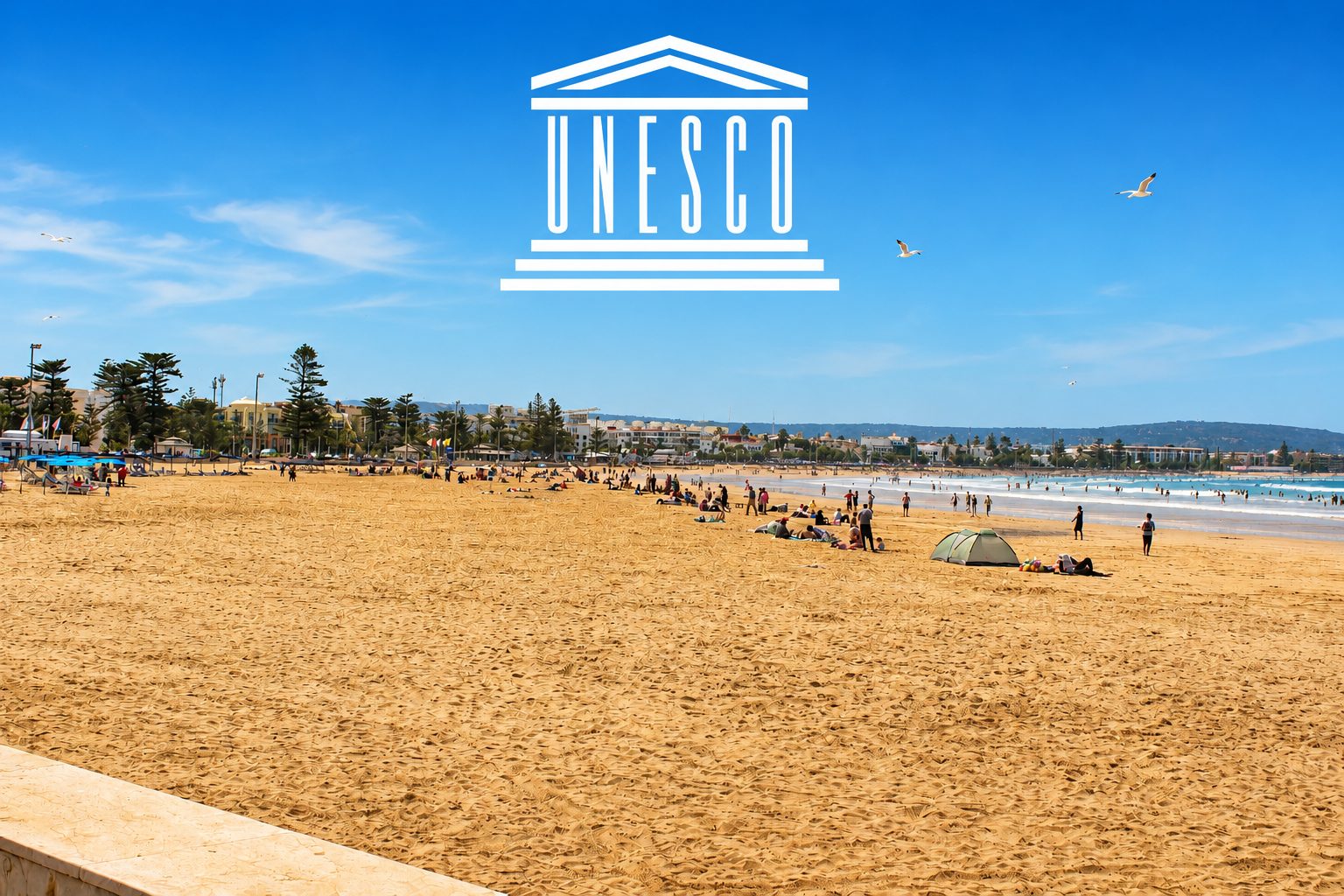
Essaouira, a UNESCO World Heritage Site
A prestigious international distinction
Since December 2001, the medina of Essaouira (former Mogador) has been officially inscribed on the UNESCO World Heritage list. This prestigious distinction does not only reward the aesthetic beauty of the city, but above all attests to its "outstanding universal value".
For Essaouira, this listing marked a major historical turning point, transforming the city of the Alizés into an unmissable cultural and tourist hub on an international scale. It reminds the whole world that this small Atlantic port preserves treasures of history, architecture and human cohabitation that are unique of their kind.
Why was Essaouira chosen by UNESCO?
The inscription of a site on the World Heritage list responds to very strict selection criteria. For the medina of Essaouira, UNESCO highlighted several fundamental elements:
An exceptional model of military architecture: The city represents a remarkable and particularly well-preserved example of a fortified town from the late 18th century, combining the theories of European military architecture (Vauban style) with traditional Moroccan techniques.
A commercial and cultural crossroads: For decades, the port of Essaouira was the major point of contact between Morocco, Europe and the rest of the world, fostering intense commercial, intellectual and artistic exchanges.
The harmony of a European-style fortified city
Unlike other traditional medinas in Morocco, which developed organically and in a labyrinthine way, Essaouira stands out for its regularity. Designed by the French architect Théodore Cornut under the orders of Sultan Sidi Mohammed Ben Abdallah, it features wide straight avenues and open squares.
This urban organization, innovative for its time, encircled by its powerful ramparts and maritime bastions such as the Skala, makes the medina a masterpiece of urban planning where Western defensive art blends with the poetry of Oriental alleyways.
A historic symbol of tolerance and cohabitation
Beyond its stones and ramparts, UNESCO also valued the human history of Essaouira. From its founding, the sultan wished to make the city a space of openness. Over the centuries, it welcomed diverse communities: Muslims, Jews and Christians lived and prospered there in perfect harmony.
This diversity can still be seen today in the local architecture, particularly through the Mellah district (the former Jewish quarter), the historic synagogues and the churches that stand alongside the mosques of the medina. Essaouira remains, in the world's collective memory, the very symbol of intercultural and interreligious dialogue.
Preservation and restoration: the challenges of heritage
UNESCO's listing implies a great responsibility: that of preserving the authenticity of the site for future generations. Since 2001, numerous restoration campaigns have been carried out in Essaouira, funded by the State, local authorities and dedicated associations.
These projects involve the rehabilitation of the ramparts damaged by marine erosion, the restoration of the monumental gates (Bab Marrakech, Bab Doukkala), as well as the renovation of major historic buildings and the old residences of the Kasbah. Each project aims to modernize infrastructure while scrupulously preserving the original traditional materials and techniques.
The benefits of the listing for the city
UNESCO's impact on daily life in Essaouira is immense:
Global attractiveness: The UNESCO label attracts travelers, artists and experts from all over the world every year, boosting the local economy, riad-based hospitality and the craft sector.
Cultural pride: This international recognition has strengthened the pride of the Souiris in their heritage and has stimulated numerous cultural initiatives, turning the medina into a vast open-air museum.
Why visit a UNESCO-listed city?
Discovering the medina of Essaouira means traveling back in time and walking in the footsteps of caravan traders, foreign ambassadors and sailors of old. This UNESCO label is a guarantee of an authentic cultural experience, sheltered from mass urban development.
Every white alley, every blue shutter and every golden stone of the ramparts bears witness to a collective history carefully preserved. Visiting Essaouira means understanding how openness to the world and respect for traditions can create one of the most harmonious and fascinating cities on the Atlantic coast.