The architecture of Essaouira
A unique architectural heritage in Morocco
The architecture of Essaouira is one of the city's greatest treasures. A true encounter between Moroccan, Portuguese, French and European influences, it gives Essaouira a unique character found nowhere else in Morocco. Wandering through its streets, visitors discover a harmonious city where every façade, every door and every rampart tells part of its history.
Built in the 18th century at the instigation of Sultan Sidi Mohammed Ben Abdallah, Essaouira was designed as a modern city for its time. Its urban plan, drawn up by the French architect Théodore Cornut, combines the elegance of European fortifications with the charm of traditional Moroccan architecture. This blend of styles forms the very identity of the city today.
A city designed according to a modern plan
Unlike many Moroccan medinas that developed gradually over the centuries, Essaouira was built according to a precise plan. Its streets are wider, more open and logically organized, making it easier for both residents and visitors to move around.
This urban organization was particularly innovative for its time and reflects the desire to create a city open to international trade while ensuring its security through an extensive system of fortifications.
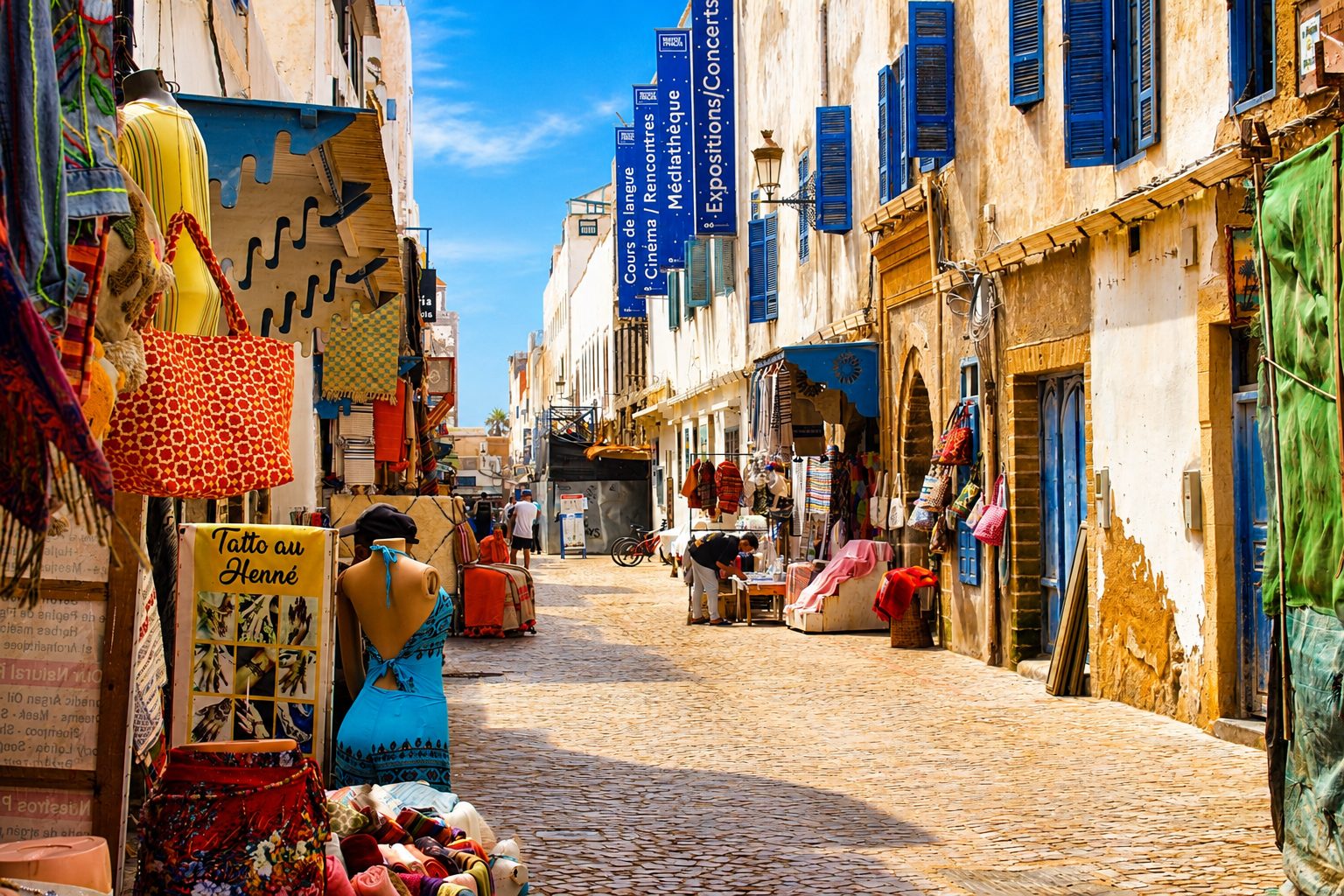
The famous white façades and blue shutters
The image of Essaouira is instantly recognizable thanks to its white houses with blue shutters. This harmony of colors adds to the city's charm and creates a luminous atmosphere all year round. White naturally reflects the heat of the sun, while blue echoes the Atlantic Ocean just a few meters from the ramparts.
This combination of colors has become one of Essaouira's visual signatures. Wooden doors, wrought-iron balconies, traditional windows and restored façades also help preserve the authenticity of the medina.
The ramparts and fortifications
The ramparts are one of the most impressive elements of Essaouira's architecture. Built to protect the city against maritime attacks, they surround a large part of the medina and today offer spectacular views over the Atlantic Ocean.
The bastions, defense towers, monumental gates and the platforms where old cannons were once installed still bear witness to Essaouira's strategic importance in the 18th century. These fortifications are among the best preserved in Morocco.
Riads and traditional houses
Inside the medina, many traditional houses have been transformed into riads, guesthouses or charming hotels. The interior architecture is generally organized around a central patio bathed in light.
The rooms are arranged around this inner courtyard decorated with zelliges, carved wood and artisanal ironwork. These buildings showcase the full skill of Moroccan craftsmen and offer a peaceful atmosphere far from the outside bustle.
From materials to historic gateways: the pillars of the souiri style
The structure of the city rests on traditional elements and major strategic access points:
Traditional materials: Local stone is widely used for the ramparts, while white lime covers the façades. Thuya wood, emblematic of the region, magnificently adorns doors and ceilings.
The monumental gates: The medina is accessed through historic gates that were once part of the defensive system. Among the best known, Bab Marrakech, Bab Doukkala and Bab Sebâa stand as true witnesses to the city's military past.
An architecture facing the ocean
The Atlantic Ocean has strongly influenced the design of Essaouira. The ramparts protect the city from waves and winds, while the buildings are constructed to withstand the marine climate.
Streets oriented toward the ocean promote air circulation, offering a pleasant sense of freshness even during the summer months. This adaptation to the climate partly explains why Essaouira enjoys remarkable comfort throughout the year.
A preserved heritage
Thanks to numerous restorations carried out over the years, Essaouira has retained much of its original architecture. The medina's listing as a UNESCO World Heritage Site in 2001 reinforced the protection of its monuments and encouraged the restoration of historic buildings while respecting their original architecture.
Today, every renovation helps preserve the authentic character of the city for future generations.
Why is Essaouira's architecture so unique?
Few cities in Morocco display such harmony between historical heritage, European military architecture and Moroccan traditions. The white façades, blue shutters, ramparts, riads, squares, monumental gates and fortifications together form a remarkable architectural ensemble that makes Essaouira one of the most beautiful cities in the kingdom.
Strolling through its streets means discovering a true open-air museum where every building tells part of the city's history. This architectural richness fully contributes to Essaouira's charm and explains why it continues to captivate travelers from around the world.